
In the global healthcare landscape, quality has become a non-negotiable factor for discerning patients. Whether it’s a life-saving surgery, specialized treatment, or comprehensive wellness care, patients want assurance that they are receiving top-tier medical services.
One of the most trusted indicators of hospital quality is accreditation. In this regard, India’s healthcare system stands out for its exceptional number of internationally accredited hospitals that deliver high standards of care at a fraction of the cost compared to Western countries.
The Power of Hospital Accreditation
Accreditation is much more than a certificate; it is an ongoing validation of a hospital’s commitment to quality and patient safety. The two major accreditations are
- National Accreditation Board for Hospitals & Healthcare Providers (NABH)
- Joint Commission International (JCI)
These accreditations require hospitals to meet rigorous standards across a wide range of metrics, including clinical protocols, patient safety, infrastructure, and operational excellence.
In India, over 800 hospitals are accredited by NABH, and more than 50 hold the prestigious JCI accreditation, marking the country as a leader in healthcare quality.
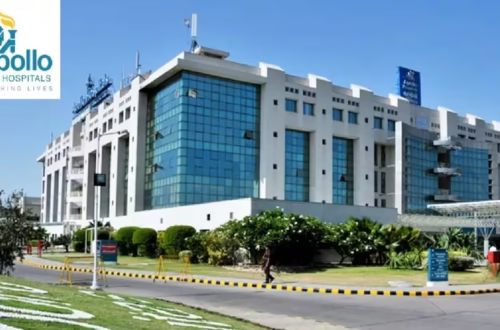
For instance, Apollo Hospitals, a leading hospital chain in India, alone has more than 7 centres with JCI accreditations. These accreditations signify that these hospitals adhere to international benchmarks, providing patients with the confidence that they are receiving care on par with the best institutions globally.

Accreditation Standards
NABH Accreditation

NABH is recognized by the International Society for Quality in Healthcare (ISQua), which further underscores its credibility. The standards outlined by NABH are comprehensive and focused on multiple key areas:
- Access, Assessment, and Continuity of Care: Hospitals are required to have a streamlined process for patient admission, care delivery, and discharge. This includes emergency protocols, multidisciplinary care plans, and preventive healthcare measures
- Care of Patients (COP): Hospitals must provide uniform care across all settings, from outpatient clinics to critical care units. This includes adhering to protocols for clinical procedures, anesthesia, and surgical safety
- Management of Medication (MOM): Ensures that hospitals have robust systems for handling, prescribing, and administering medication. This includes pharmacy oversight and special procedures for high-risk medications like chemotherapy drugs
- Infection Prevention and Control (IPC): A critical component of patient safety, hospitals must implement comprehensive infection control measures, including sterilization, hand hygiene, and surveillance of healthcare-associated infections
JCI Accreditation

The JCI is the gold standard in international healthcare, with stringent evaluation criteria that Indian hospitals proudly meet. JCI standards focus heavily on:
- Patient-Centered Care: JCI-accredited hospitals prioritize patient rights, informed consent, and clear communication, ensuring that patients understand their treatment plans and feel empowered in their healthcare journey.
- Global Best Practices: JCI hospitals adhere to best practices in clinical care, patient safety, and infection control, often exceeding the national healthcare requirements in many countries.
- Continuous Improvement: JCI mandates regular evaluations, feedback loops, and corrective action plans, ensuring that hospitals are always evolving to offer better care.
American Accreditation Commission International (AACI)

AACI is an emerging, independent organization that provides accreditation services to healthcare organizations globally. AACI accreditation standard is relatively newer but is designed with a common vision to improve the quality of healthcare services through a comprehensive set of standards and evaluation processes, focusing on patient safety, healthcare quality, and management practices.
The Impact of Accreditation on Treatment Quality
For patients, choosing an accredited hospital directly impacts the quality of care they receive. Accredited hospitals are required to continually assess and improve their care standards. This translates into:
- Better Clinical Outcomes: Hospitals with NABH and JCI accreditation consistently show lower rates of complications, fewer medical errors, and faster recovery times.
- Enhanced Safety Protocols: From infection control to medication management, accredited hospitals maintain strict protocols to protect patients from unnecessary risks.
- Patient-Centered Care: These hospitals offer personalized care plans tailored to individual patient needs, ensuring that each patient is treated with the highest level of compassion and professionalism.

Source: https://lilavatihospital.com/International-Patients
India’s Leadership in Healthcare Quality
India’s prominence as a global healthcare destination is underscored by its significant number of accredited hospitals, which far exceeds many other regions.
List of JCI Accreditated Hospitals in India
This commitment to accreditation is not only a reflection of India’s advanced medical infrastructure but also of its dedication to maintaining international standards of excellence.
Despite offering premium healthcare services, India’s accredited hospitals maintain a cost structure that is far more affordable than many Western healthcare systems. This combination of quality and affordability makes India a favored destination for patients seeking specialized treatments without the financial burden often associated with world-class healthcare.
Top JCI and NABH Accredited Hospitals in India
- Apollo Hospitals: Several branches, including Chennai and Delhi, hold both NABH and JCI accreditations, making them a trusted name for high-quality care.
- Fortis Healthcare: With many locations NABH-accredited, Fortis Delhi and Fortis Mulund (Mumbai) also hold JCI certification.
- Medanta – The Medicity, Gurgaon: NABH-accredited and one of India’s top hospitals for multi-specialty care.
- Max Super Specialty Hospitals: NABH-accredited across multiple branches, including Delhi, known for advanced oncology care.
- Manipal Hospitals: One of India’s top healthcare providers, Manipal’s flagship hospital in Bangalore is NABH accredited.
The impact of JCI and NABH accreditations has now started proliferating into the digital world as well. Recently, JOGO health India was granted the first JCI accreditation for a digital clinic. Similarily more than 100 hospitals are lined up for digital NABH accreditation, given the recent surge in telehealth.

Why Choose India for Your Healthcare Needs?
- Internationally Recognized Accreditations: NABH and JCI accreditations serve as a mark of trust and assurance for patients. When you choose an accredited Indian hospital, you are selecting a healthcare provider that has met the highest standards of patient safety, quality, and care.
- State-of-the-Art Medical Technology: Indian hospitals invest heavily in the latest medical technology and equipment, ensuring that patients receive the most advanced treatments available.
- Holistic and Personalized Care: Accredited hospitals are required to offer care that is not only clinically sound but also compassionate and patient-centric. From admission to discharge, patients receive care that is tailored to their unique needs.

For patients seeking the highest standards of care, India’s accredited hospitals offer an unparalleled level of trust, quality, and affordability. With more NABH and JCI-accredited hospitals than many regions globally, India’s healthcare system provides a level of medical superiority that few countries can match. Whether you are seeking complex surgeries, specialized treatments, or advanced diagnostics, India remains the premier destination for those who demand nothing but the best in healthcare.
If you looking for treatment options across the leading JCI and NABH hospitals in India, all you need to do is book free medical consultation on our website.